
Pilot Kit 2.0: The Must-Have Flight Reference Tool


It's been a few months since we last met. I hope everyone has been doing well.
First of all, I want to sincerely apologize to the ServBay users. The ServBay 2.0 I promised you before the New Year has been delayed. I originally thought I could finish most of the features in January and release a beta version before the Spring Festival in February. But I got sidetracked and ended up standing you all up.
If you have to blame something, blame Pilot Kit. A sudden whim that popped into my head in January and a bizarre bug ended up costing me the entire Spring Festival holiday.
In January, to fix a bug in Pilot Kit, I refactored the Pilot Kit APP, adding various arrival and departure procedures like airport SIDs, STARs, and IAPs, as well as airways for China and the US, NAVAIDS like VORs, DMEs, and FIXes, and data for general aviation airports all across China.
To pair with the API interfaces for this data, I created a Pilot Kit Server, written entirely in Golang. Even though I didn't know a single thing about Golang.
After the Pilot Kit Server was built, token authentication came into play. I conveniently integrated authentication systems for WeChat, Apple, Google, email, and SMS, which naturally led to a complete user system.
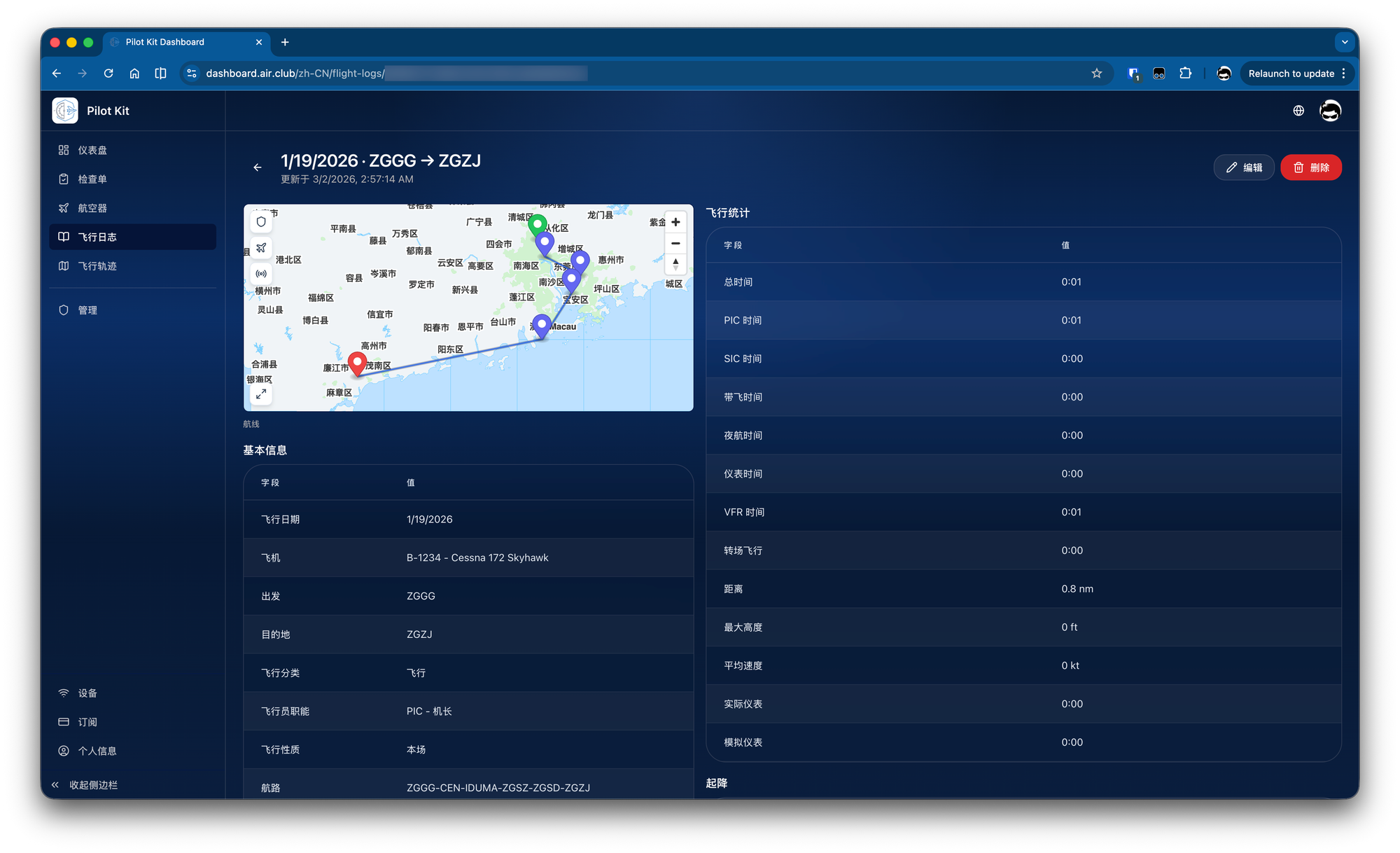
Once the user system was in place, the pilots in our group chat started clamoring for multi-device synchronization. So, I built multi-device cloud sync. To support these capabilities, I had no choice but to expand the API capabilities of the Pilot Kit Server and then develop a Pilot Kit Dashboard so that everyone can manage their flight data and checklists on the web.
I dug a hole, jumped in, felt pretty satisfied, and kept digging. As I dug, I realized I had dug myself a tunnel full of cave-ins.
Fortunately, all the hard work during this Spring Festival wasn't in vain. Pilot Kit 2.0 is now live.
Huawei and Vivo alone rejected my app review over a dozen times, which tells you just how massive the changes in Pilot Kit 2.0 are.
Let me put it this way: if you are just learning to fly, or preparing for your commercial pilot license, Pilot Kit 2.0 is absolutely your best companion.
Because Pilot Kit 2.0 has a lot of features that could easily get it taken down from app stores.
I wouldn't even be sharing these features below if I hadn't had a little too much to drink tonight. Any single one of them is enough to get reported and delisted.
The first one, and the most valuable, is the AIP data.
Pilot Kit 2.0 is likely one of the few APPs on the market that integrates AIP data. Of course, people will say there are also Garmin Pilot and ForeFlight. Yes, yes, you're absolutely right. But they lack data for China.
Anyway, I will never forget the pre-flight planning I did before I started learning to fly. Finding waypoints, planning routes, handling arrival and departure procedures. Looking for alternate airports, finding various radio frequencies. And dealing with various sectors and FIXs.
Luckily, you don't have to go through all that trouble anymore.
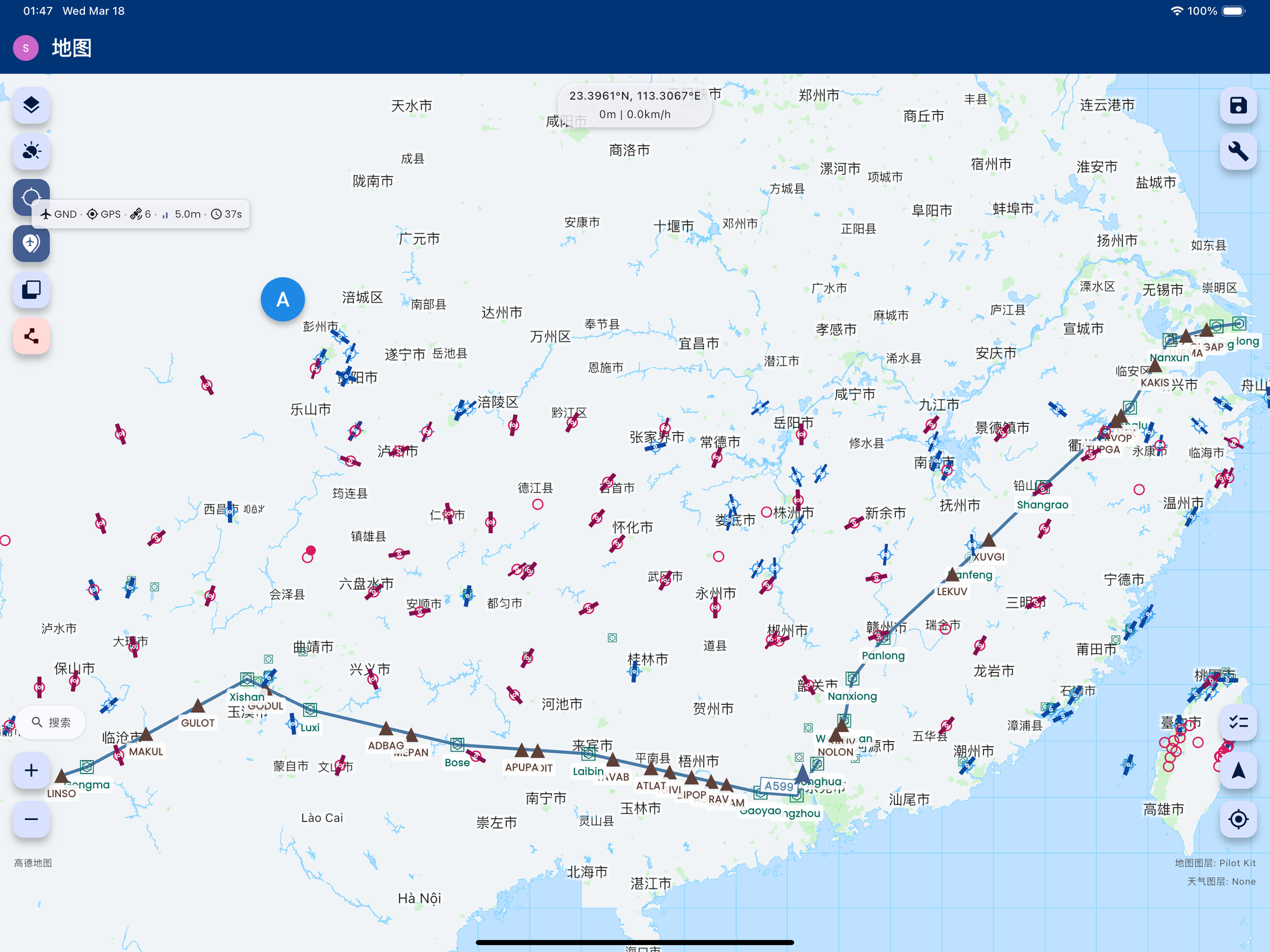
Because Pilot Kit 2.0 integrates airways and waypoints for China, the US, and even the whole world, as well as SIDs, STARs, and AIPs for core mainstream airports. Whether you want to look up the SID or AIP for ZGGG, an airport coordinate point like GG504, or check the A599 airway, we've got you covered.
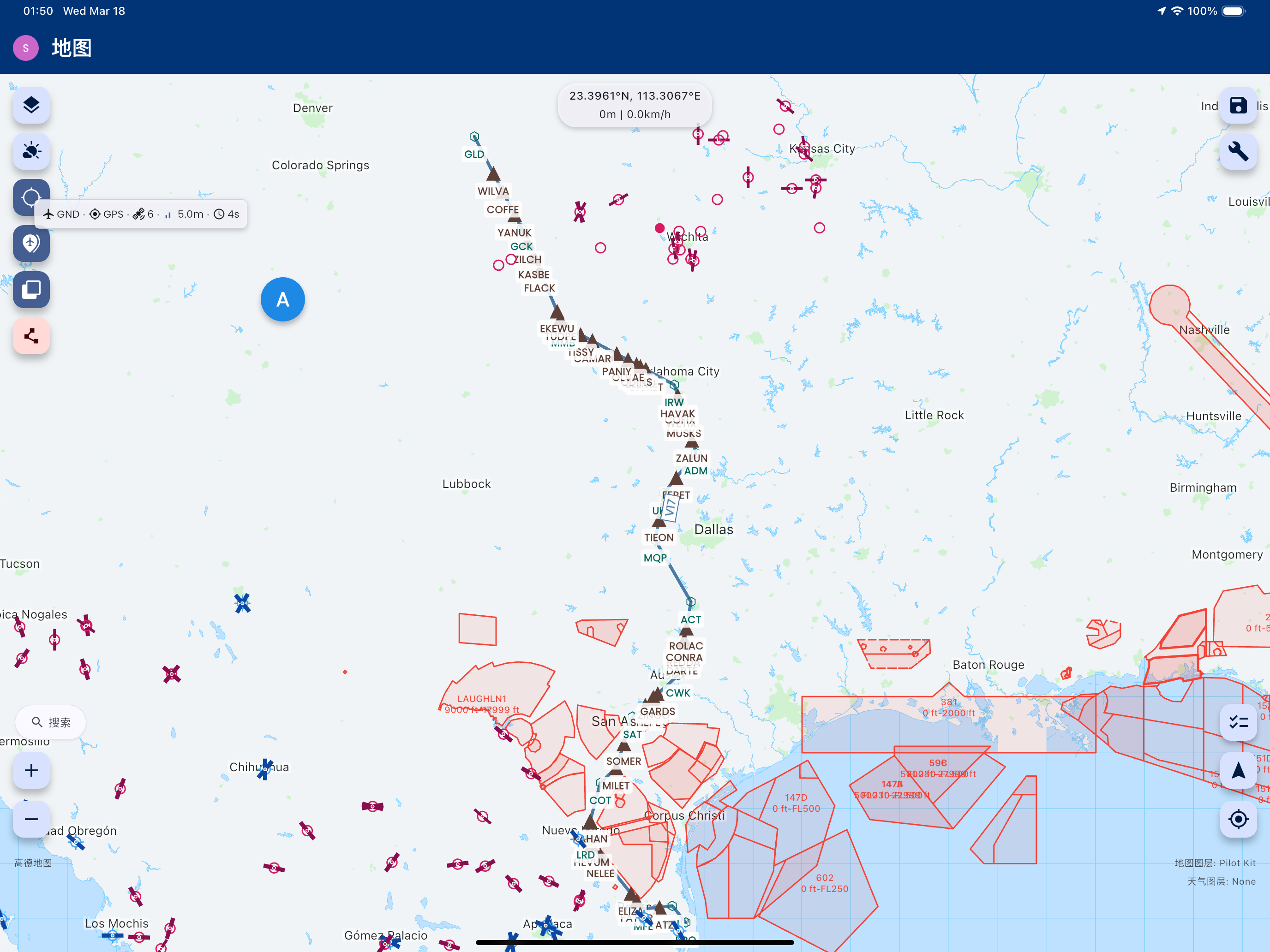
We have US airways too.
Of course, all this is based on public data and cannot be used for real-world flying.
Mom says I don't have to painstakingly squint over aviation charts anymore.
Browsing airport arrival and departure procedures is also very convenient. For pre-flight planning, you can query an airport's SID, STAR, and IAP at any time.
And of course, with highlights.
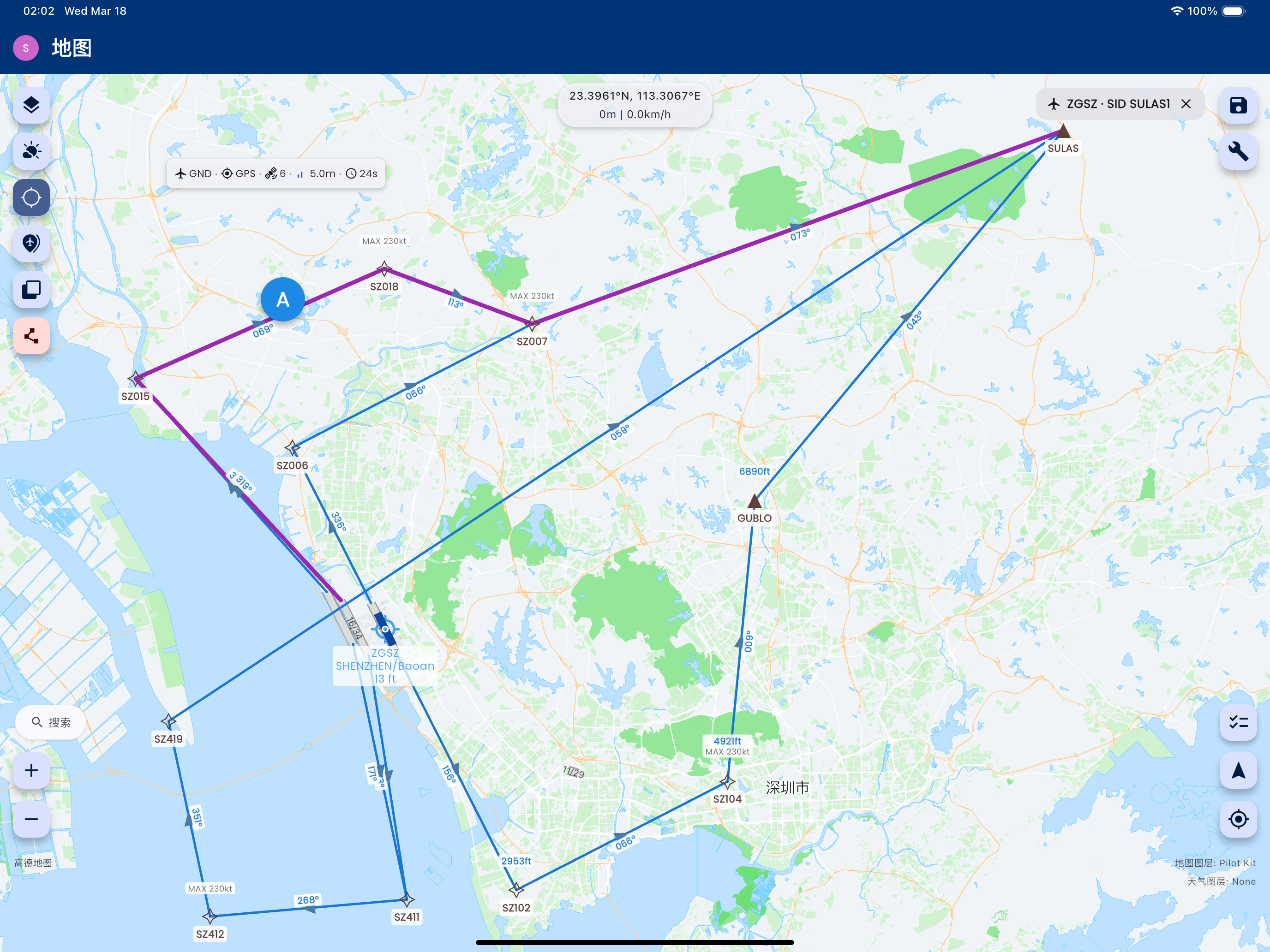
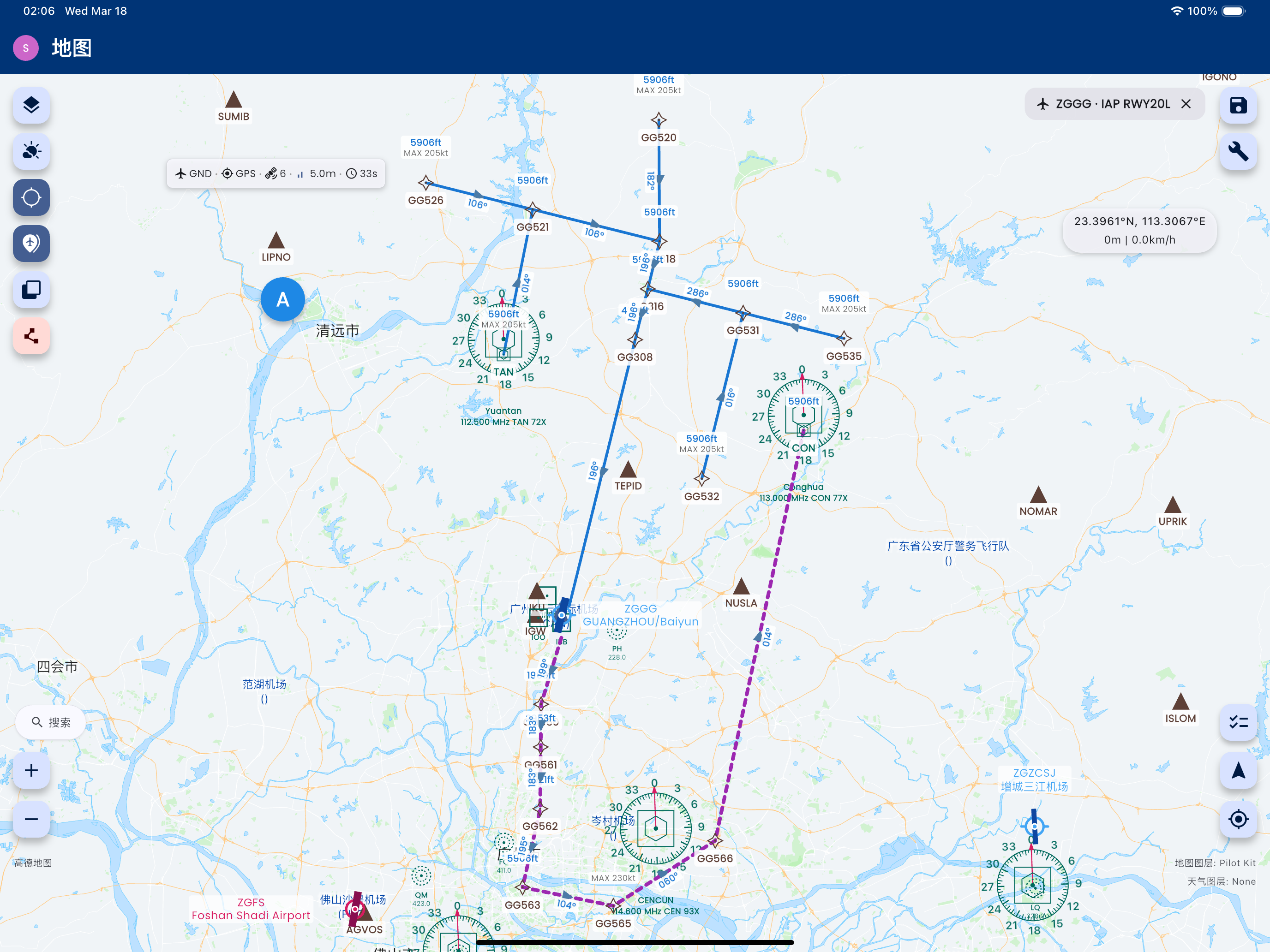
Airport information, including runways, frequencies, as well as METAR and TAF weather data, is also available. As always, it's visualized, so you know exactly what's going on at a single glance.
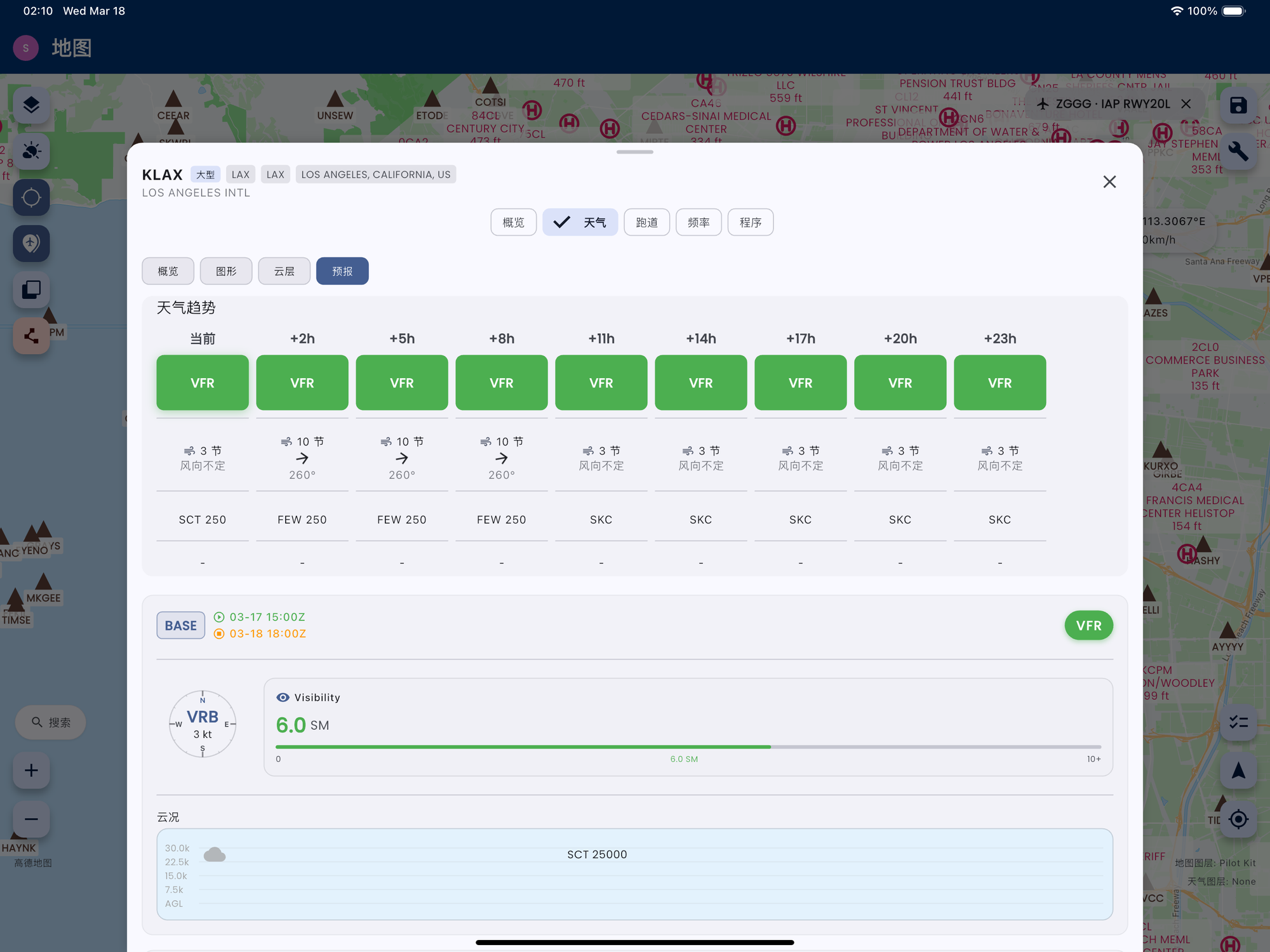
Right now, my only complaint is that the 13-inch iPad screen isn't big enough.
I'll say it again: it's convenient and easy to use, but it can only be used for pre-flight planning and post-flight review, not for actual flying.
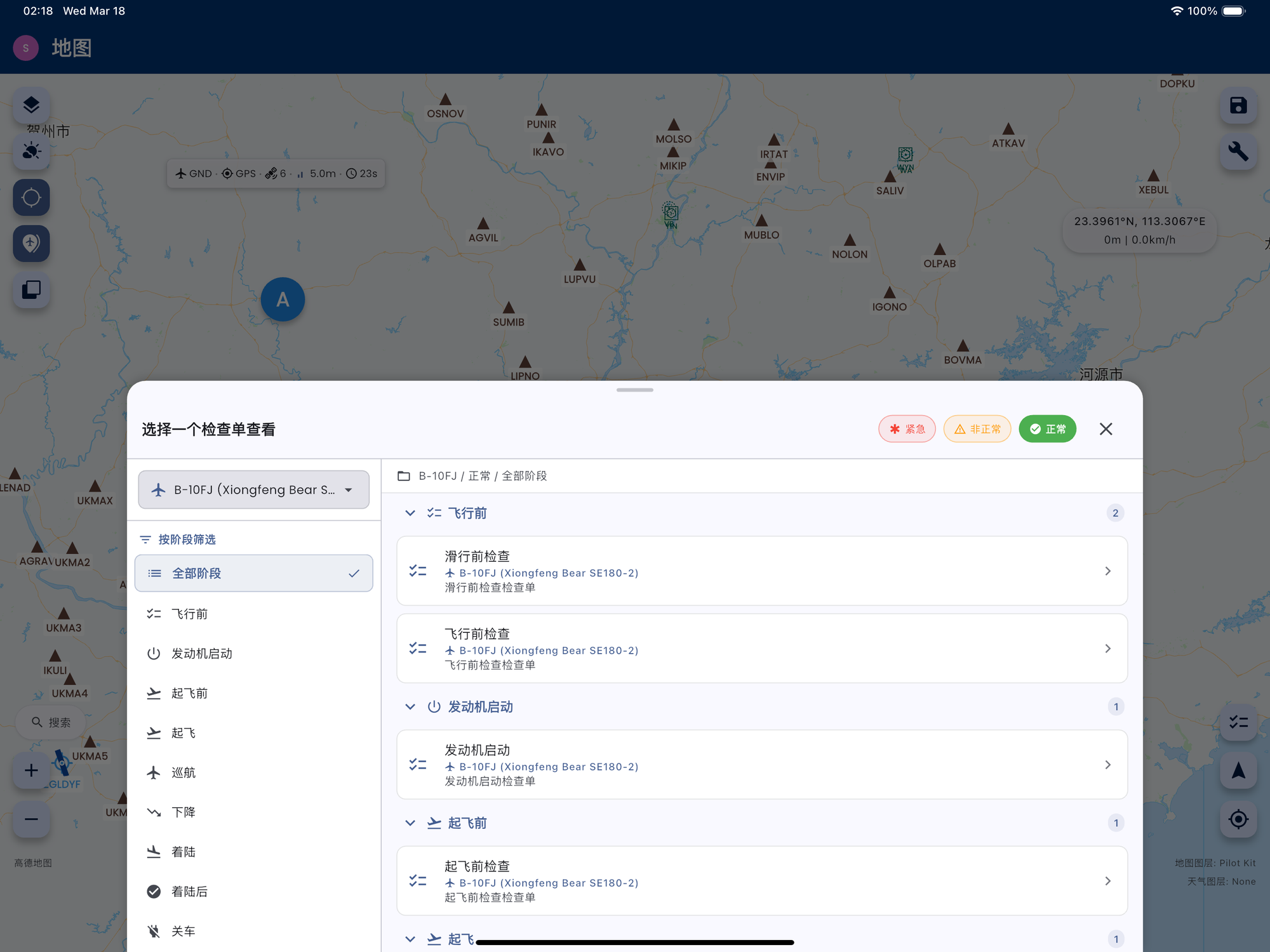
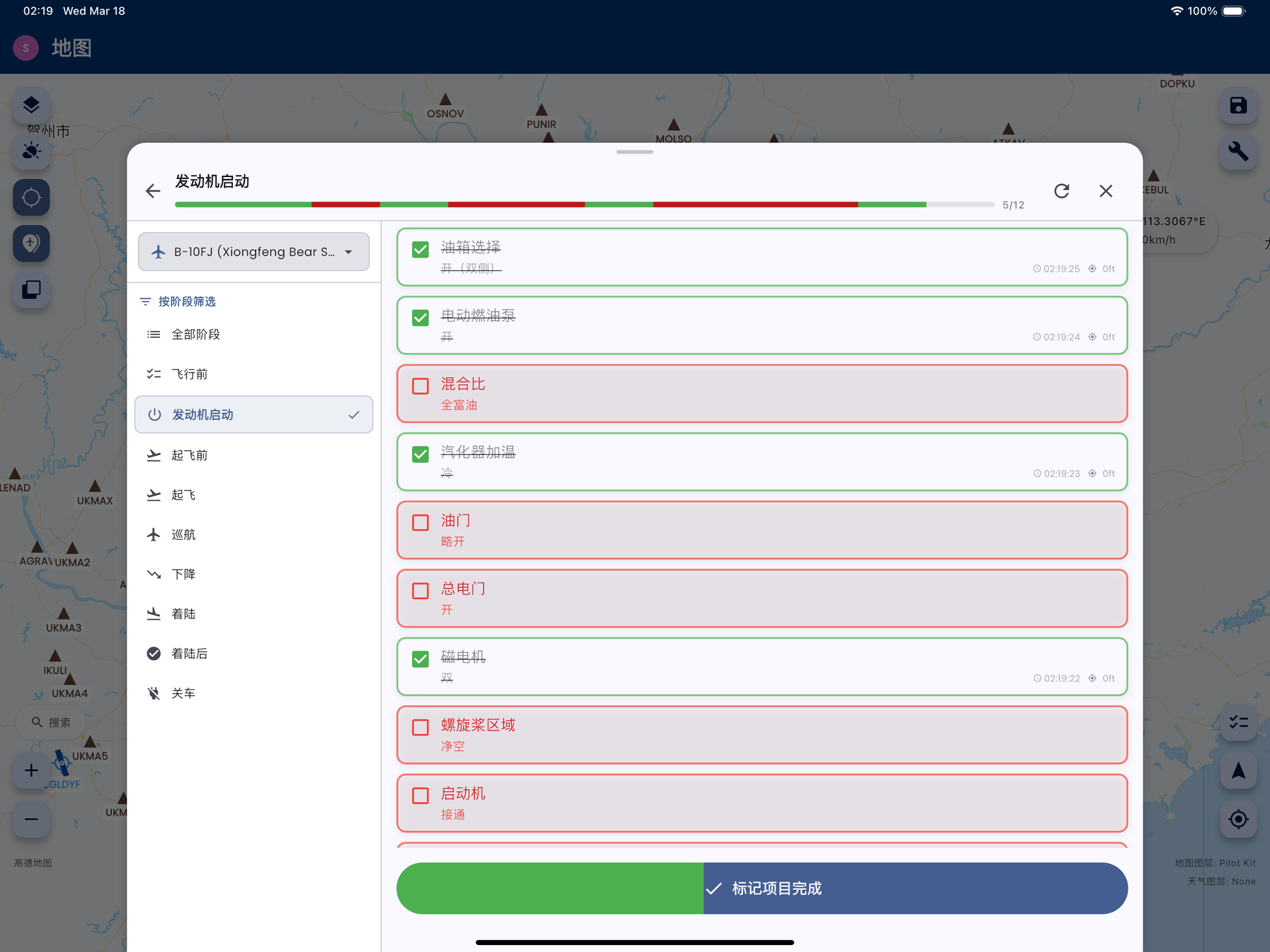
Besides pre-flight and post-flight planning, in-flight support is also essential. In Pilot Kit 2.0, we have built-in checklists for 122 aircraft models. The commonly flown 172 and DA40 go without saying, but we even have the checklist for the domestic Aurora SA60L. What? You fly a Cub? We've got it! We have the SE180 ready for you!
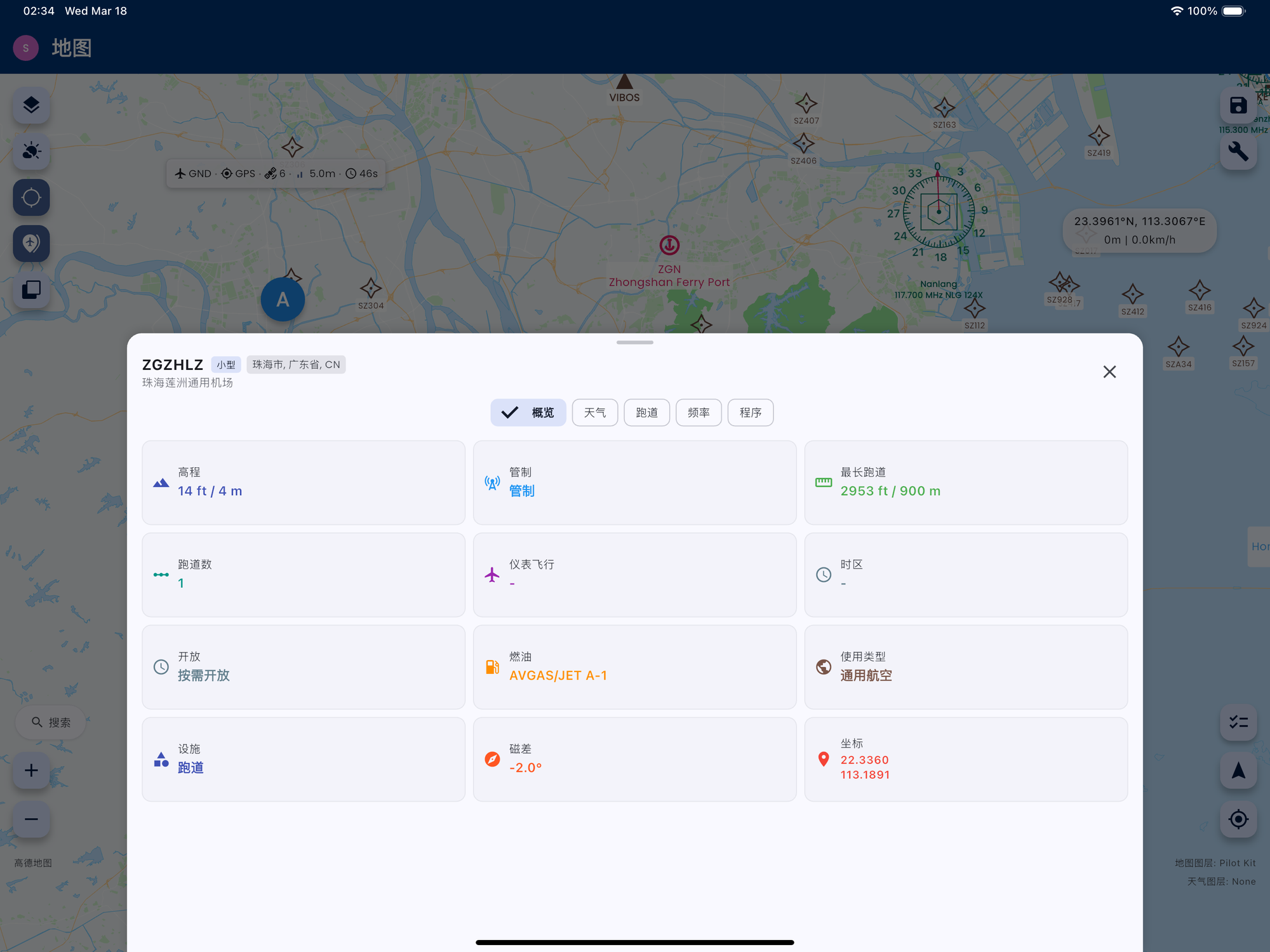
In addition to all this, this update also includes data on general aviation airports in China. The country is vigorously developing general aviation, but I haven't found any APP on the market with Chinese general aviation airport data. The vast majority of Pilot Kit's Chinese users operate primarily around general aviation airports on a daily basis. Therefore, Pilot Kit 2.0 has introduced comprehensive information on domestic general aviation airports, at least providing some data assistance for pilots in their daily training. Of course, general aviation in China is still developing, and this information will take time to perfect. I also hope everyone joins the group chat to exchange ideas.
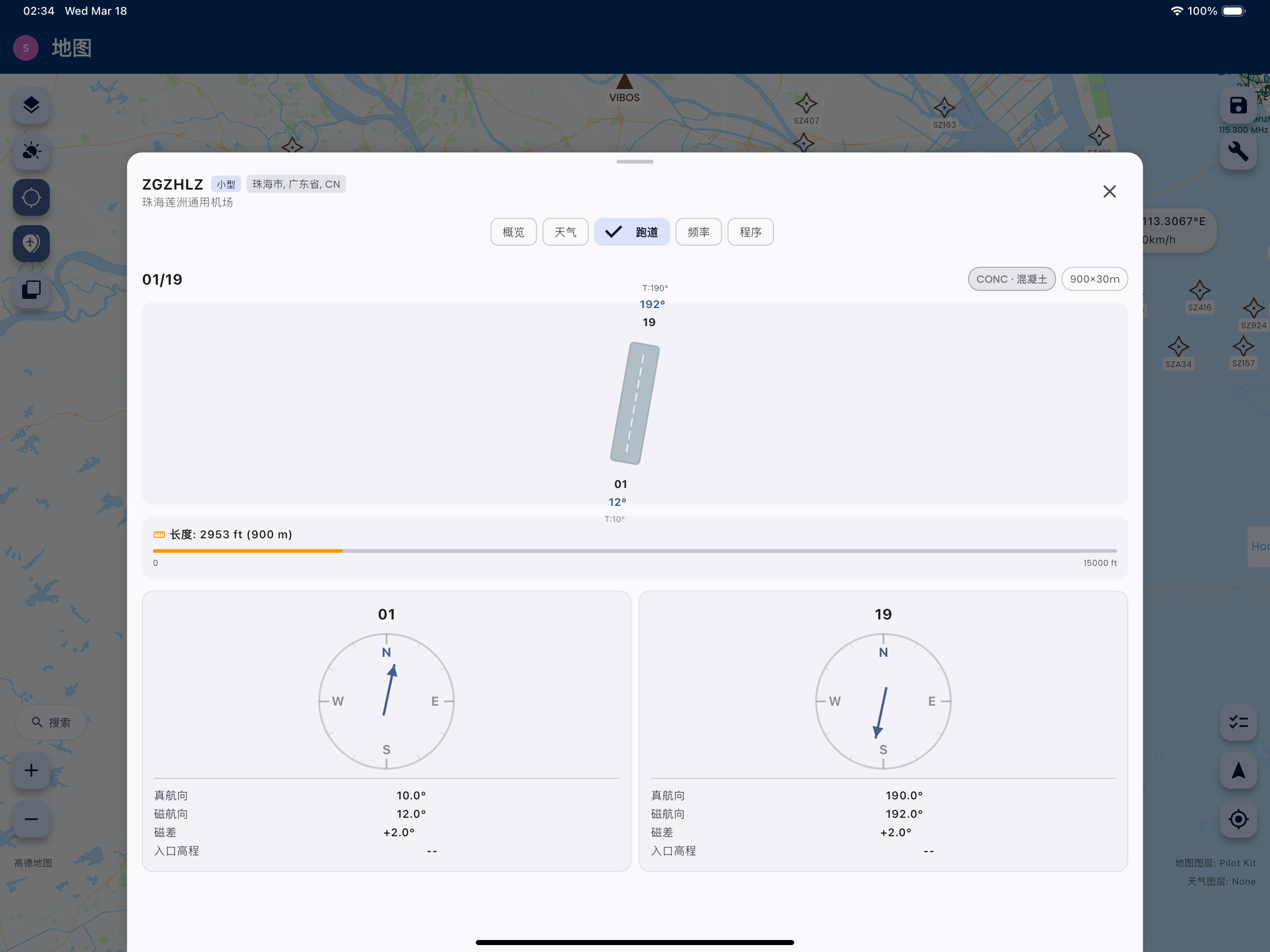
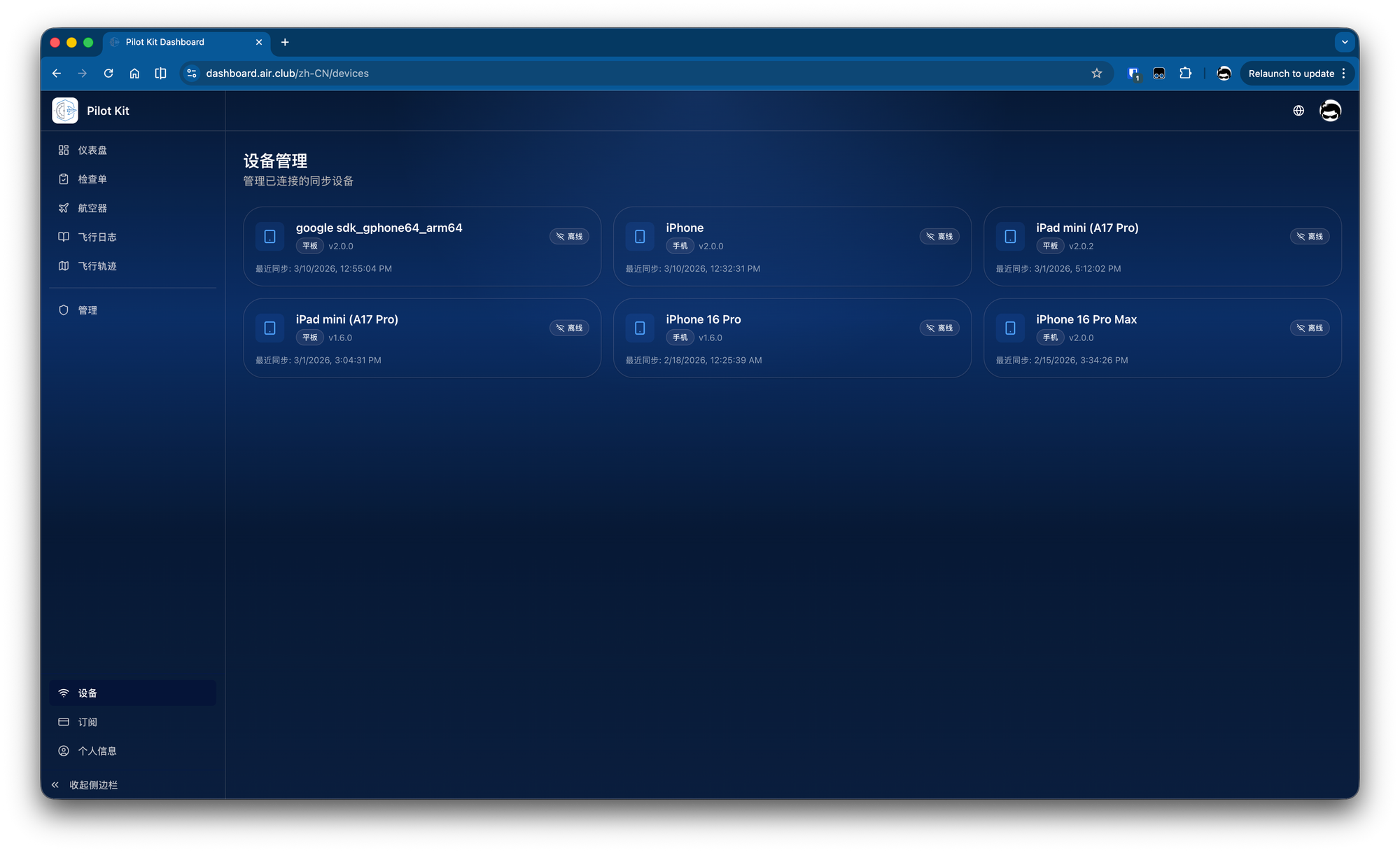
As for multi-device, multi-platform cloud sync, it's just a small, inconspicuous feature in Pilot Kit 2.0, hardly worth mentioning. Anyway, once you log in, you can freely switch and edit data across phones, tablets, Apple, Android, HarmonyOS, web, and other devices, all synced in real-time.
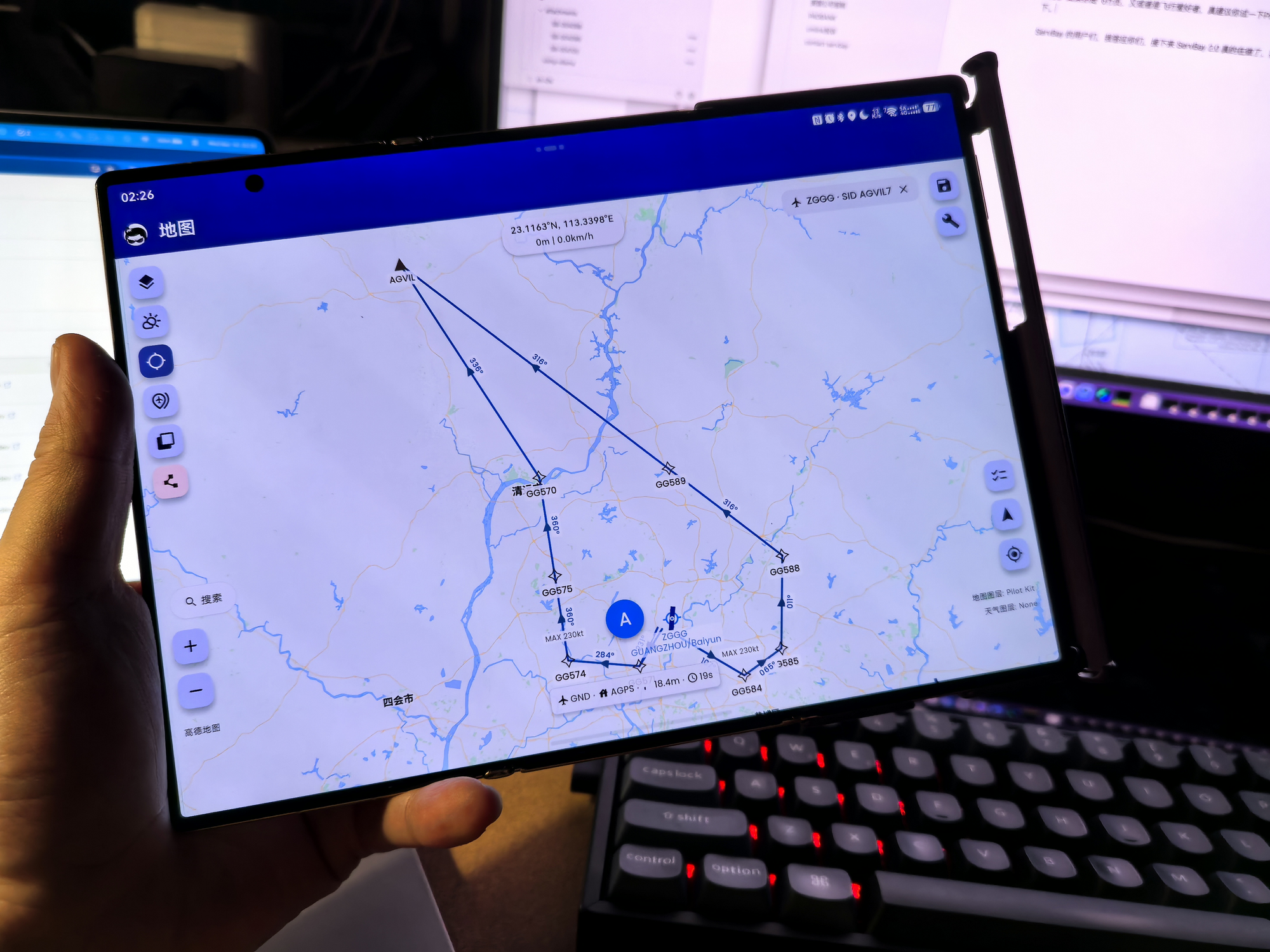
Finally, there's another major improvement: support for native HarmonyOS. We've even specifically optimized it for HarmonyOS bi-fold and tri-fold phones. How should I put it? It's like our slogan: "Looking good no matter how you fold it."
So, if you are a pilot or an aviation enthusiast, I highly recommend you try Pilot Kit 2.0. It's available on major app stores domestically and internationally.
At the same time, if you are a pilot or aviation enthusiast, you are also welcome to join our group. Just a tap of your finger, long-press to scan the QR code.
Once again, I apologize to the ServBay users. I promise you, ServBay 2.0 is really in the works next, I swear.
Last but not least, everything you see here (except for this article) was written by me using AI. For the entire Pilot Kit project, I used AI to write the APP, AI to write the official website, AI to write the dashboard, and even AI to write the API Server. Throughout the whole process, doing it all by myself, I didn't write a single line of code.
This is the charm of AI. AI allows a 40-year-old laid-off gig worker to flexibly develop things that used to require a 100-person team working for several years.